
As summer begins to transition into early autumn, the vineyard at Lympstone Manor enters one of its most exciting and rewarding stages of the year. After months of careful cultivation, the focus turns to preparing for the annual grape harvest – the moment when an entire year’s work comes together.
Harvest is the culmination of every season in the vineyard. From winter pruning and spring budburst to summer canopy management, every decision has been made with one goal in mind: producing exceptional fruit that reflects the unique maritime terroir of the Exe Estuary.
As the grapes continue to ripen, our vineyard team carries out the final stages of canopy management. Trellis foliage clipping helps maintain an open, balanced canopy, allowing sunlight and airflow to reach the grape bunches while ensuring the vines remain healthy. At the same time, final leaf thinning carefully removes selected leaves surrounding the fruit, improving air circulation and reducing humidity around the bunches while allowing the grapes to achieve optimum ripeness.
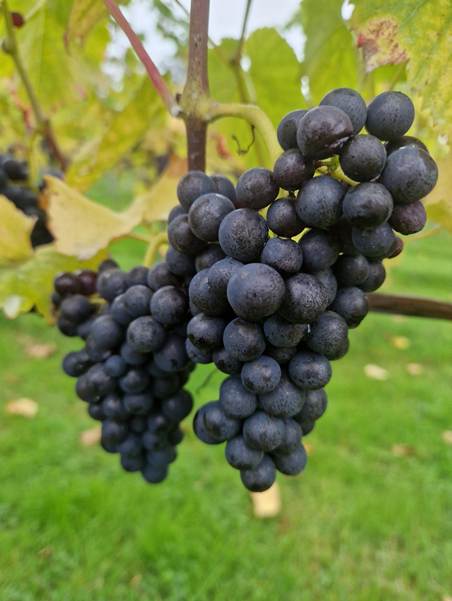
These finishing touches are carefully timed and adjusted according to the season’s weather conditions. Every vineyard is different, and every vintage presents its own unique characteristics.
One of the most important parts of preparing for harvest is monitoring grape maturity. While the fruit may appear ready, the decision to harvest relies on scientific analysis as much as visual inspection.
Throughout the final weeks before harvest, we begin testing the grape sugar levels using a refractometer, a specialist instrument that measures the sugar concentration within the grapes. Sugar levels are a key indicator of ripeness and play an essential role in determining the eventual alcohol content and balance of the finished wine.
Alongside these vineyard tests, representative bunch samples are carefully collected and delivered to our winemaking partners at Lyme Bay Winery. Here, the grapes undergo comprehensive laboratory analysis to measure both sugar and acidity. This detailed information enables the vineyard and winemaking teams to decide the perfect moment to begin harvesting.
Timing is everything. Harvest too early and the wines may lack depth and ripeness; wait too long and the fruit can lose its natural freshness and acidity. The goal is to achieve the perfect balance that defines the elegant style of Lympstone Manor Estate wines.
When the decision is finally made, the vineyard comes alive with activity.
Rather than relying on machinery, we work with a professional team of experienced grape pickers who carefully harvest every bunch by hand. Hand harvesting allows only the healthiest fruit to be selected while protecting the delicate grapes from unnecessary damage.
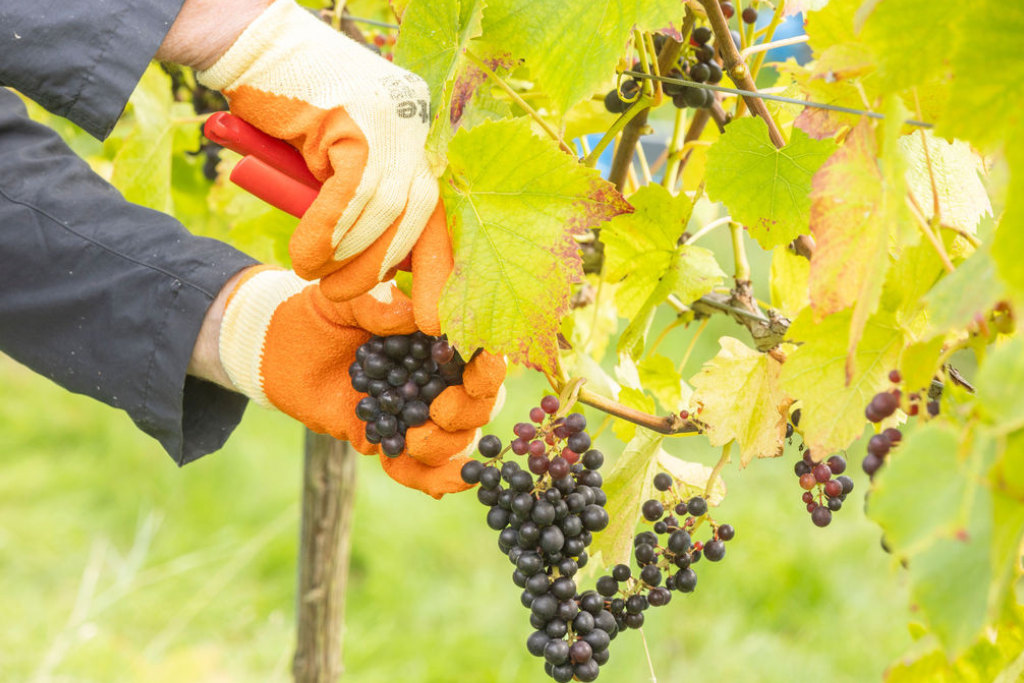
The freshly picked grapes are placed into hygienic small plastic containers, preventing the fruit from being crushed under its own weight. Maintaining fruit quality at this stage is essential, as every grape contributes to the character of the finished wine.
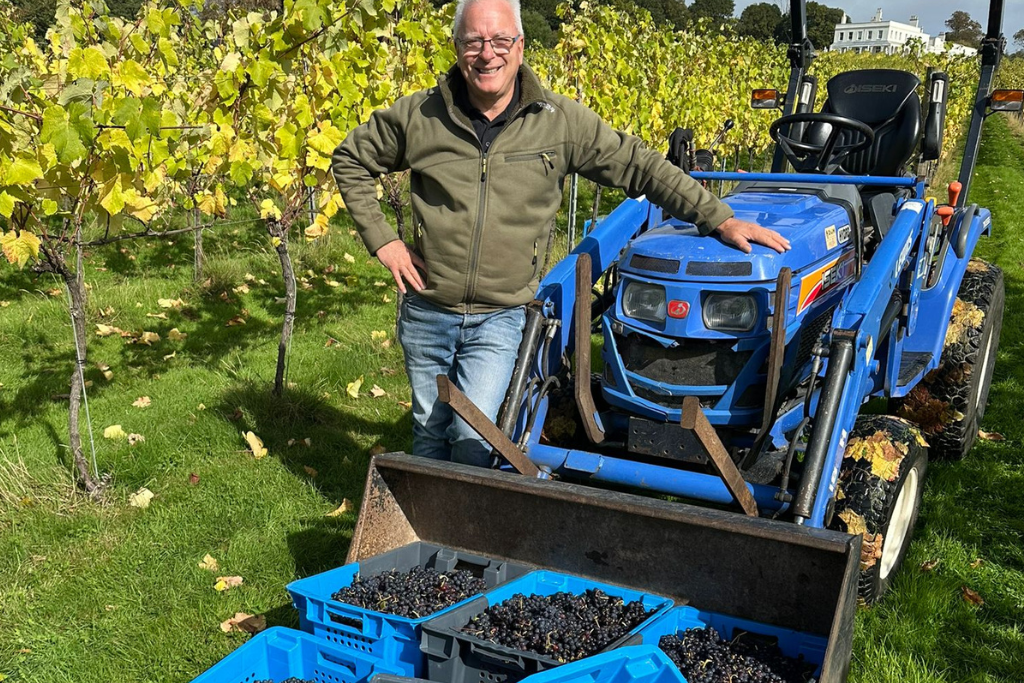
Once harvested, the grapes are transported as quickly as possible to nearby Lyme Bay Winery, where the winemaking process begins. Speed is critical, helping preserve freshness, natural aromas and the integrity of the fruit before pressing and fermentation commence.
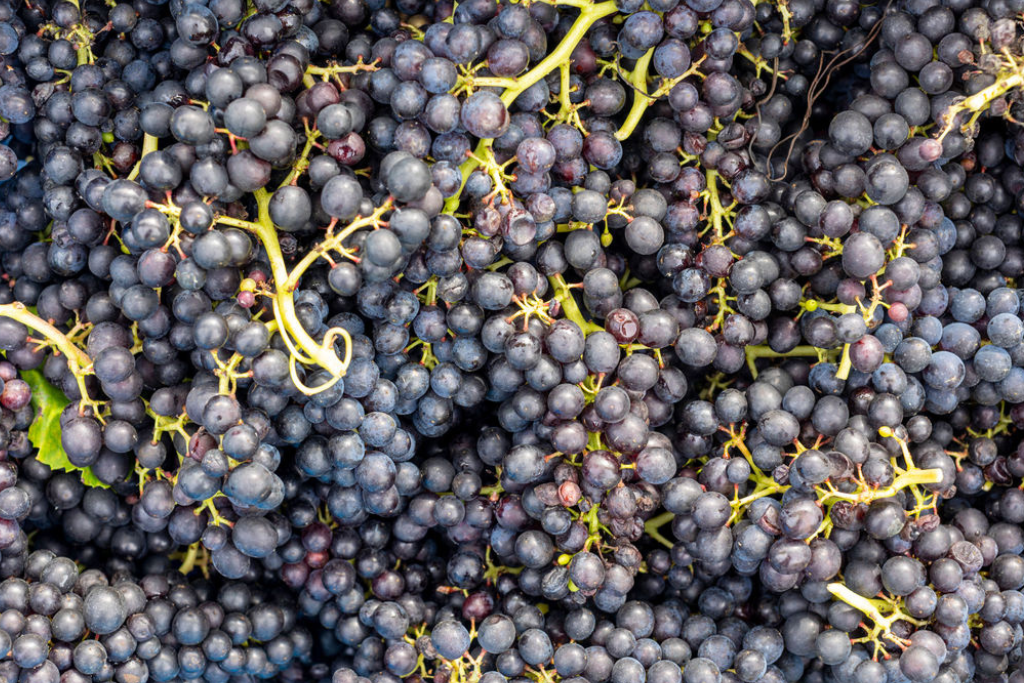
For our team, harvest represents far more than simply picking grapes. It is the celebration of a year’s dedication, teamwork and patience, and the beginning of another exciting chapter in creating our award-winning collection of Lympstone Manor Estate wines. Each vintage captures a unique moment in time, reflecting the seasons, the landscape and the meticulous care that goes into every bottle.
Celebrate the season with us at our Harvest Festival on Friday 2nd October, featuring Lympstone Manor Estate wines and seasonal food. Discover more and book your place – Celebratory Harvest Lunch.